
July 1, 2026 · 4 min read
Repair or Replace? How to Know When It's Time for a New Garage Door in San Antonio
Age, condition and cost signals that tell you when garage door replacement beats another repair — plus what new doors cost and return in San Antonio.
By Jerry's Garage Door Repair
Every garage door reaches a fork in the road: pay for one more repair, or stop pouring money into 1998. As the crew that gets paid either way, we can afford to be honest about garage door replacement in San Antonio — when a $250 repair is obviously right, when it's obviously throwing good money after bad, and how to think about the gray zone in between.
The case for repairing
Start with the repair-friendly truths, because a good chunk of "you need a whole new door" pitches are nonsense.
A broken spring is not a broken door. Neither is a frayed cable, a cranky opener, or one dented panel on a current model. These are wear items on a machine designed to have its wear items replaced. If your door is under ~12 years old, structurally straight, and the problem is one component — repair it and move on with your life. Typical numbers are in our San Antonio price guide.
Repair is the right call when:
- The door is under 12–15 years old and panels are sound
- This is the first major failure, not the third
- The failed part is a normal wear item (spring, cable, roller, opener gear)
- A matching panel is still manufactured, if one's damaged
The case for replacing
Replacement earns its keep when the door itself — the steel, the sections, the frame — is the problem.
The one-third rule. If a repair estimate exceeds roughly a third of a comparable new door's installed price, replacement usually wins the five-year math. A new door resets every wear component at once: springs, cables, rollers, seals, hardware.
The repeat-offender rule. Paying for the same category of repair twice in two years is your door telling you something. Rust that ate one cable is eating the others; a frame that's racked once will rack again.
The signals we look for:
- Multiple panels dented, rusted through, or delaminating
- The door is 20+ years old with obsolete, unsupported hardware
- Sections have shifted so the door leans or gaps at the edges
- Storm or vehicle damage across more than one section
- No insulation over an attached garage (more below)
What San Antonio heat changes about the math
Here's the part national advice columns miss: in our climate, an uninsulated steel door over an attached garage is a radiator pointed at your house. Garages here hit 110–120°F in summer, and every room sharing a wall or ceiling with that garage pays for it on the electric bill.
A modern polyurethane-core door (R-12+) keeps the garage 15–20 degrees closer to livable, quiets street noise, and feels dramatically more solid. If you're replacing anyway, insulation is the single best-value box to tick on the order form — and it's a big part of why replacement pencils out better here than in mild climates. (It also pairs well with our Texas-heat maintenance checklist to keep the whole system healthy.)
The curb-appeal and resale angle
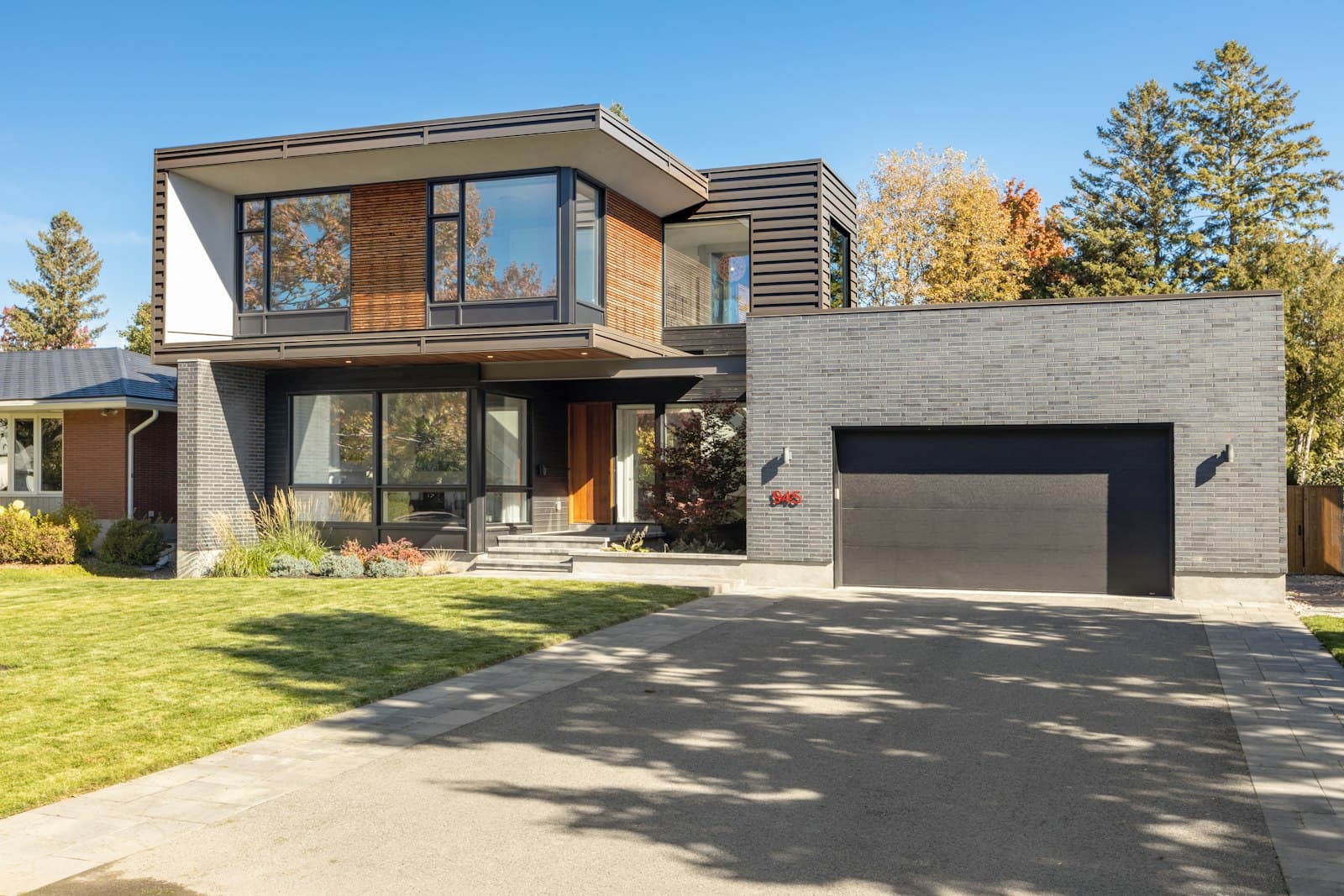
Your garage door is often 30% of your home's street-facing façade — on a lot of San Antonio floor plans, closer to 40%. Remodeling-industry cost-vs-value studies have ranked garage door replacement at or near the top of all home projects for resale return year after year, routinely recouping around or above its full cost at sale.
Translation: if your door is the worst-looking thing on an otherwise sharp house, replacement isn't an expense so much as a repositioning of money you'll largely get back — with a decade or two of daily enjoyment in between.
Modern options worth knowing about: flush contemporary panels, carriage-house styles without the fake-hardware look, full-view aluminum-and-glass for modern builds, and wood-look composites that shrug off our humidity. Browse the styles on our new door installation page.
What replacement actually costs and involves
Installed, in the San Antonio market: basic non-insulated steel singles start around $1,200–$1,800; quality insulated doubles — the sweet spot for most homes — run roughly $2,000–$3,500; designer and full-view glass doors go up from there. Day-of, it's about half a day: old door out and hauled away, new tracks and springs sized to the new door's weight, opener recalibrated, balance tested. Details on our replacement process here.
The bottom line
Repair a young door with one bad part. Replace an old door with systemic problems — and in Texas, let insulation and resale value put their thumbs on the scale. And if a company leads with "you need a whole new door" before examining yours, get a second opinion; that's a commission talking.
Ready for a straight answer on yours? Book online or call (210) 762-7135 — we quote repair and replacement side by side and let the math decide.
Frequently asked questions
How long does a new garage door last?
A quality steel door, properly installed, runs 20 to 30 years in Texas conditions. Wear parts on their own shorter clocks — springs every 7–10 years, openers every 10–15 — but the door itself is a decades-long purchase.
How long does installation take?
Once the door is in hand, a standard single or double sectional swaps out in about half a day — old door hauled away, new tracks and springs set, opener recalibrated, balance tested. Custom orders take 2–6 weeks to arrive from the manufacturer first.